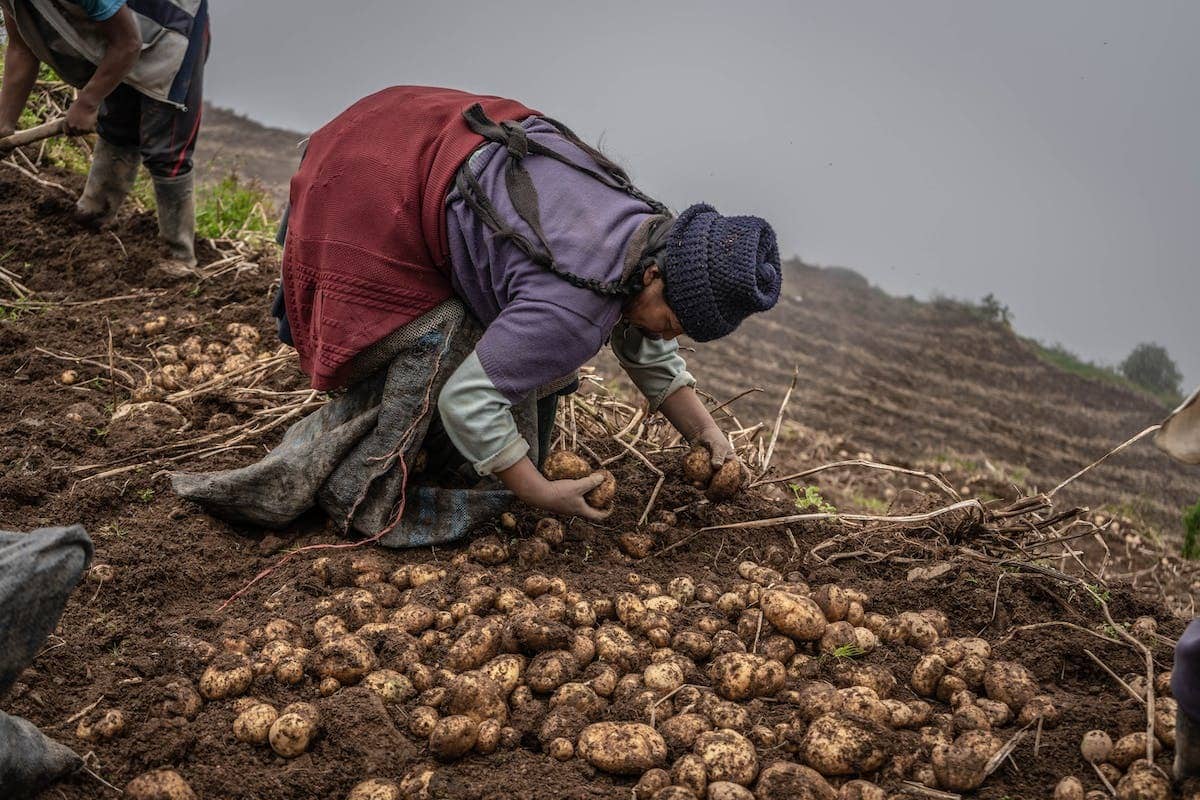
Growing your own potatoes can be a rewarding and productive experience. You need to consider both the planting and the final yield of the harvest. If planted too closely, the plants may compete for resources, leading to a poor harvest. If planted too far apart, they may not fully benefit from the available soil. So, what is the optimal distance for planting your potatoes?
Preparing the soil for optimal planting: steps to follow
The choice of potato variety to plant requires special attention, taking various factors into account. Some of these factors include the type and characteristics of the soil, the local climate, and a often underestimated but essential criterion: the potato planting distance.
This last factor is crucial to ensure a good development of the tubers. Generally, it is recommended to space each plant 30 to 40 cm apart in the row and about 70 cm between the rows. These measurements ensure that the plants have enough space to grow without excessive competition for water or nutrients in the soil.
However, this recommendation is not rigid, as it can vary depending on the variety grown. Certain types, such as ‘Pompadour’ or ‘Charlotte’, which are resistant to blight and nematodes, can thrive even with a reduced potato planting distance due to their rapid growth. On the other hand, for later varieties like ‘Bintje’, more space is needed due to their prolonged growing cycle, which requires much more in terms of nutritional resources.
Therefore, when choosing which type to plant in our agricultural land or vegetable garden, it is important to consider not only the quality of the soil available but also the space to optimize our yield. The appropriate potato planting distance will then intrinsically depend on the exact cultivar chosen and its specific needs related to optimal growth.
Choosing the right potato variety for your soil: practical tips
The ideal distance between potato plants plays a crucial role in the growth and yield of the tubers. By maintaining an adequate distance, you promote air circulation around the plants, thus preventing the spread of fungal diseases such as blight.
Beyond aeration, a good distance between plants also allows the roots to develop unhindered. The tubers need sufficient space to expand and form their nutrient reserves. If the plants are too close together, they will compete for access to water and nutrients in the soil. This can lead to poor growth of the tubers or even deformed development.
You need to consider the type of soil used. In clay soil, for example, where drainage is often limited, it is better to space the plants further apart to avoid any risk of rot in case of excess stagnant water around the roots.
Conversely, in sandy soil that tends to dry out quickly, it may be necessary to slightly reduce the distance between plants so they can share their water resources more effectively.
It should be noted that certain specific types of potatoes require a different distance due to their particular characteristics. Early varieties, for example, tend to produce more compact plants and can be placed a bit closer together. In contrast, late varieties or those with large tubers generally require a greater distance to allow for optimal development.
The ideal distance between potato plants is a key element of successful planting. By considering various factors such as soil type, the variety grown, and its specific needs, you can ensure harmonious development.
Spacing potato plants to promote their growth: what is the ideal distance
Once you have established the ideal distance between your potato plants, be sure to familiarize yourself with the appropriate watering techniques to maintain adequate soil moisture. Water is a crucial element for potato growth, and effective irrigation can make all the difference in your harvest.
The first rule to follow when it comes to watering is to not overwater the plants. Excess water can lead to problems such as root diseases or tuber rot. It is better to have slightly moist soil than waterlogged soil.
There are several watering methods that can be used depending on your needs and the type of garden you have. One common approach is to use a drip irrigation system.
Watering potato plants: techniques to maintain adequate moisture
The importance of fertilization for a bountiful harvest cannot be underestimated. Indeed, potatoes are crops that require essential nutrients for their optimal growth. Proper fertilization provides these essential nutrients to the soil and the plants.
To start, you should conduct a soil analysis to determine its fertility needs. This preliminary step will allow you to adjust your inputs based on any deficiencies. You can consult a professional or use analysis kits available commercially.
Once you have identified the specific needs of the soil, it is time to choose an appropriate fertilization method. There are various options, ranging from organic fertilizers to chemical fertilizers. The former are often preferred for environmental reasons as they help improve soil structure and biodiversity.
When choosing an organic fertilizer, ensure it contains essential elements such as nitrogen (N), phosphorus (P), and potassium (K). These three key nutrients promote healthy plant growth and ensure better tuber formation.
It is recommended to spread the fertilizer before planting or during the initial growth phase so that the seedlings can quickly benefit from the nutrients necessary for their vigorous development. Regular application throughout the growing cycle can also be considered to maintain soil fertility.
You should mention the importance of organic matter in the fertilization process.
Fertilizing potato plants: a key to a bountiful harvest
In order to preserve the health of your plants and avoid diseases, it is essential to implement certain preventive measures. Crop rotation proves to be a wise choice. By alternating the locations of your potato plantings each year, you reduce the risks of infections and promote the biological diversity of the soil.
Be sure not to plant your potatoes in areas where diseases or pests are present. Be vigilant in spotting obvious signs of infection or deterioration.
The use of certified seeds can also contribute to the prevention of diseases.
Preventing diseases and pests in potato plants: precautions to take
To ensure optimal planting of your potatoes, pay particular attention to the ideal distance between plants. Indeed, adequate spacing will promote the development of tubers and contribute to achieving satisfactory yields.
When planting your plants, be sure to respect a recommended minimum distance of about 30 centimeters between each plant. This margin will allow the roots to develop harmoniously while avoiding competition phenomena between the different plantings.
Do not hesitate to take into account the type of soil present in your garden. Clay or heavy soils generally require a greater distance between plants to facilitate their growth and aeration. In this case, plan for spacing of up to 40 centimeters to optimize nutrient circulation and tuber development.
Conversely, if you are cultivating in sandy or light soil, a slightly shorter distance may be considered (about 25 centimeters), as these types of soils are often better drained and offer less resistance to root development.
Consider the growing method you wish to adopt. If you choose the hilling technique, which involves gradually covering the stems with soil as they grow to improve tuber production, plan for a wider initial spacing to allow this operation without hindering plant growth.
It is important to remember that these recommendations regarding ideal distances are indicative and may vary based on different factors such as climate, the variety of potatoes grown, and specific cultural practices of each gardener. Therefore, do not hesitate to adapt these measures according to your particular situation.
By following these main guidelines regarding the ideal distances between plants when planting potatoes, you will maximize your chances of obtaining a bountiful and healthy harvest.