In an increasingly digital world, technology is an integral part of our daily lives. Televisions, in particular, have seen remarkable advancements, offering unparalleled image and sound quality. To fully enjoy these features, it’s important to master certain technical aspects, such as connecting an HDMI cable. This may seem intimidating for some, but don’t worry, it’s actually a simple and quick process. Here is a step-by-step guide to help you connect an HDMI cable to your television without difficulty.
Preparing the Equipment for a Smooth HDMI Connection
The identification of HDMI ports on your television and other devices is an essential step for effectively setting up an HDMI cable. The purpose of this section is to clarify this process in detail.
Start by noting that every device with high-definition video capability will have at least one HDMI port. The location of these ports may vary depending on the manufacturer and model of the device. In most televisions, especially those made recently, the ports are typically located either on the back or on the side.
The ‘hdmi cable television’, as its name indicates, refers to the standardized type of cables used to transmit uncompressed digital audio and video signals between two compatible devices. Typically, these connections are established between a source (like a Blu-ray player or a gaming console) and a receiver (for example, an HD TV).
Visually speaking, the port where you will insert the ‘hdmi cable television’ is often about 1 cm wide with two upper corners sloping inward, forming a trapezoidal shape that is longer at the bottom than at the top. The letters ‘HDMI’ are usually marked near the port by manufacturers to assist in its identification.
Before anything else, however, make sure that your screen indeed has such a port before even considering purchasing an ‘hdmi cable television’. Also identify whether your other devices have this necessary interface to receive or send audio/video data in digital format.
Once you have correctly identified all these elements • the HDMI ports on your television and your various electronic devices • you are then ready to move on to the next step: physically connecting your ‘hdmi cable television’ to the corresponding devices.
When done correctly, the cable should plug in easily without needing to apply any excessive pressure. However, in some rare cases, it may be necessary to use an adapter if the connections do not match perfectly.
It is crucial to correctly identify the ports as this avoids any inconvenience when plugging in the ‘hdmi cable television’. Always make sure to perform this preliminary check before taking any action.
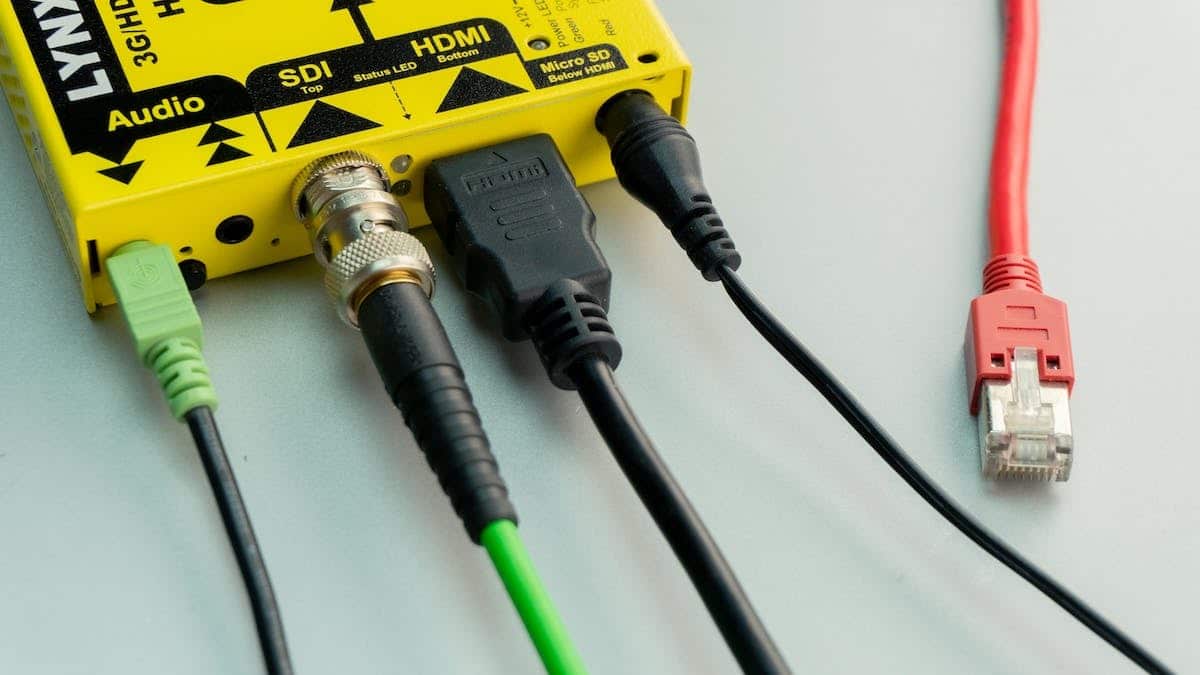
Locating the HDMI Ports on Your TV and Devices
The next step in connecting the HDMI cable is to identify the different types of connectors present on the cable itself. There are several versions of HDMI cables, ranging from version 1.0 to version 2.1, each offering different features and transmission capabilities.
The HDMI connectors are generally divided into three types: the standard connector (Type A), the mini connector (Type C), and the micro connector (Type D). Type A is the most commonly used to connect televisions to other devices such as Blu-ray players or gaming consoles.
Once you have identified which type of connector is at each end of the HDMI cable you are using, simply insert each end into its corresponding port on your television and other electronic devices. Just make sure to properly align the pins of the connector with the appropriate holes in the port to establish a good connection.
Be sure to note that once you have physically plugged in your HDMI cable, it may be necessary to make some additional adjustments to optimize the display and audio on your television. Most modern televisions automatically detect the video source when a device is connected via an HDMI cable, but if this is not the case, you may need to manually select the appropriate input in the Settings menu.
If your equipment also has other connectivity options, such as DVI or DisplayPort, you may consider using these ports in conjunction with the HDMI cable to achieve better video quality.
Connecting an HDMI cable to your television is a relatively simple process that only requires a few steps. By identifying the HDMI ports on your devices and using the correct type of connector on the cable itself, you will be able to fully enjoy the benefits offered by this advanced technology.
Successfully Connecting Your HDMI Cable
Once you have completed the physical connection of the HDMI cable to your television, it is crucial to check the integrity of the connection. To do this, turn on your television and ensure that the cable is securely plugged into the HDMI ports of both devices. A loose connection can lead to a loss of audio or video quality.
If you notice any display or sound issues after connecting the HDMI cable, do not panic. There are a few possible adjustments to remedy these common problems. Check if you have selected the correct source on your remote control or through the Settings menu of your television. Also, ensure that your other external devices are properly configured to use the HDMI output.
In some cases, you may encounter a compatibility issue between the resolutions supported by your source device and those supported by your television. You can resolve this issue by manually adjusting the video settings on the source device to match the capabilities of your television.
If despite all these checks and adjustments, you still cannot achieve a clear image or satisfactory sound, there may be a defect with one of the components used in the HDMI chain: the cable itself, the HDMI ports on your electronic devices, or even the software drivers associated with the operating system of the source device.
In this case, we strongly recommend consulting the technical support of the manufacturer of the affected devices. They can guide you through the troubleshooting process or offer solutions tailored to your situation.
Checking the HDMI connection and making any necessary adjustments are essential steps to ensure an optimal audiovisual experience. By following these simple yet effective tips, you will be able to fully enjoy the performance offered by this advanced technology and appreciate your movies, series, and video games with exceptional quality.