Dull hair and an itchy beard often share the same origin: care that is poorly suited to the type of hair or the skin underneath. Before multiplying products, comparing what each area of the face and scalp actually requires helps eliminate unnecessary steps and focus the routine on what truly changes the result.
Hair versus beard: what the hair fiber requires according to the area
Beard hair and scalp hair do not react to the same aggressions. Their diameter, density, and the surrounding skin environment differ enough to justify distinct care.
| Criterion | Hair | Beard |
|---|---|---|
| Hair thickness | Fine to medium | Significantly thicker |
| Available sebum | Distributed along the length by brushing | Often insufficient, dry skin under the hair |
| Exposure to friction | Limited (pillow, hat) | Constant (collar, scarf, mask, hand) |
| Risk of ingrown hairs | Low except for very short shaving | High, especially on the neck and jawline |
| Main daily aggression | Heat from the hairdryer, pollution | Shaving, repeated trimming, food residues |
This table highlights a point that “all-in-one” routines ignore: a classic shampoo does not meet the hydration needs of the beard. The skin under the beard hair lacks sebum because the thick hair absorbs the little that is produced. A facial cleanser or beard shampoo formulated to respect the skin’s pH gives better results than a repurposed hair shampoo.
To delve deeper into the choice of formulations suitable for each area, the care on British & Co brings together ranges designed separately for the scalp and facial skin.
Ingrown hairs and folliculitis: distinguishing mechanical irritation from a skin problem
Bumps that appear after shaving or trimming the beard are almost always attributed to acne. This confusion leads to the application of drying anti-acne treatments that worsen irritation. Ingrown hairs or mechanical folliculitis are the most common causes of these localized inflammations.
When the hair is cut very short, it can curl under the skin and provoke an inflammatory reaction of the follicle. The neck and jawline are the most exposed areas because the hair often grows at an oblique angle.
- After shaving, applying a warm (not hot) compress to the irritated areas relaxes the follicles and limits the risk of ingrown hairs.
- Spacing shaves by at least one day allows the hair time to grow sufficiently above the skin surface to avoid re-ingrowth.
- A gentle exfoliant applied twice a week to the neck and cheeks releases hairs that begin to curl under the skin.
If the bumps return despite these adjustments, the cause may be different from simple mechanical irritation. Recurrent folliculitis requires professional diagnosis, as episodes may be linked to heat, sweat, or an infectious factor, and each cause calls for specific treatment.
Bald patches in the beard or scalp: when to consult
A hairless area that appears in the beard or on the scalp is not necessarily a sign of poor maintenance. Alopecia areata is an autoimmune condition that can affect both hair areas, and no cosmetic treatment can correct it.
A round, well-defined patch that gradually expands deserves prompt medical attention. Treatments depend on the diagnosis and extent of the condition, not on the type of product used daily. Confusing alopecia with simple seasonal shedding delays care.
This distinction also applies to hair. Diffuse shedding after a seasonal change or a temporary stress usually stabilizes within a few months. A localized patch that does not regrow involves a different mechanism.
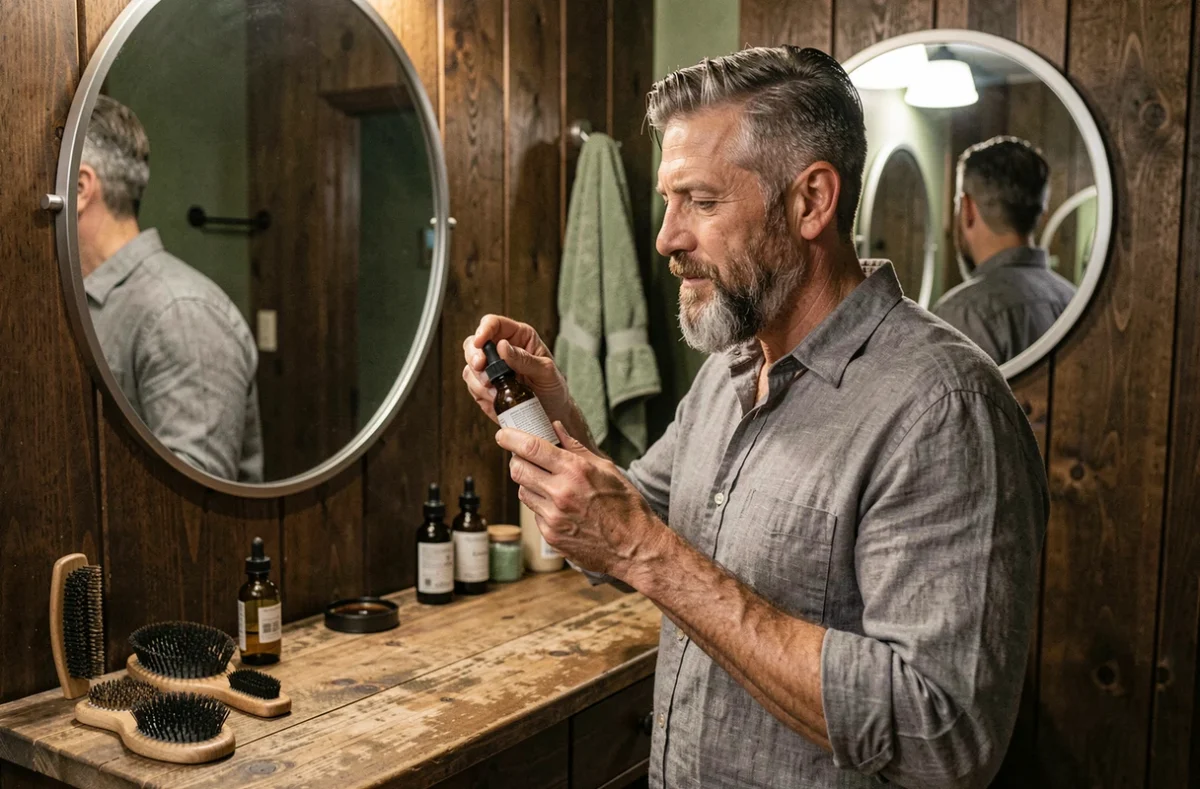
Labeling of beard and hair products: reading the ingredient list makes a difference
The European regulation 2023/1545 extends the list of fragrance allergens to be declared individually on cosmetics. New products launched on the market must comply with these requirements starting July 31, 2026, while stocks already marketed benefit from a transitional period until July 31, 2028.
For men with sensitive skin under the beard or a reactive scalp, this change is significant. Comparing the INCI lists of two beard oils or two shampoos becomes more reliable when each fragrance allergen is named separately rather than masked under the generic term “fragrance”.
- Checking for the presence of linalool, limonene, or citronellol helps identify formulations that trigger redness on the face.
- Choosing a product that lists few fragrance allergens reduces the risk of reaction on skin already weakened by shaving.
- Comparing the “fragranced” and “fragrance-free” versions of the same range highlights the ingredients responsible for potential irritations.
Reading the composition before purchasing a beard or hair care product remains the most underestimated gesture in any maintenance routine. A “natural” or “for sensitive skin” product may contain fragrance allergens in sufficient quantities to irritate a follicle already stressed by daily trimming.
Maintaining hair and beard relies less on the number of products than on their suitability for the skin underneath. Beard hair, thicker and drier than scalp hair, requires targeted hydration. Post-shaving irritations deserve a diagnosis before treatment. And the new European regulation on labeling finally provides the means to compare formulations accurately.