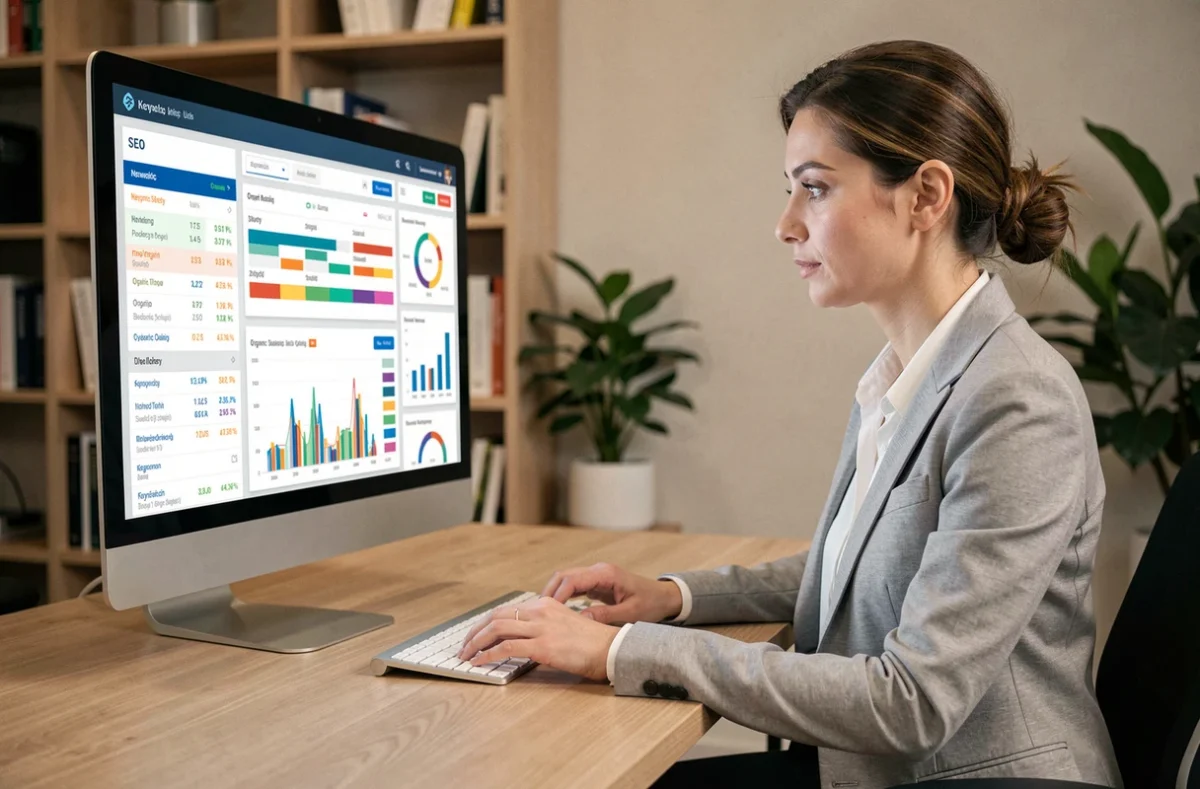
SEO in 2024 relies on a stable technical foundation, but the way Google processes and displays results has significantly evolved. Well-indexed and structured pages remain the basis for appearing in both traditional results and new generative responses (AI Overviews, AI Mode). Understanding these mechanisms allows for adjusting a natural referencing strategy without starting from scratch.
Query fan-out: covering the sub-intentions behind an SEO query
Competitors rarely address how Google breaks down a query before composing its response. Google’s AI systems can apply a technique called query fan-out: a main question is split into several related searches, and the answer aggregates the results from each.
In practice, optimized content focused on a single keyword is no longer sufficient to capture visibility in these generative responses. Each sub-intention must be covered by a standalone passage, written to directly answer a specific question.
Take an article on SEO strategies. Google can break it down into sub-queries: “how to improve site speed,” “which backlinks to obtain,” “structuring internal linking.” If your page addresses these topics in identifiable sections with clear subheadings, it has a better chance of feeding into the generated response. The resources available on the Backlink Links site detail several of these technical axes for structuring content suitable for search engines.
Writing standalone passages that address a specific sub-intention becomes a reflex to integrate from the editorial planning phase.
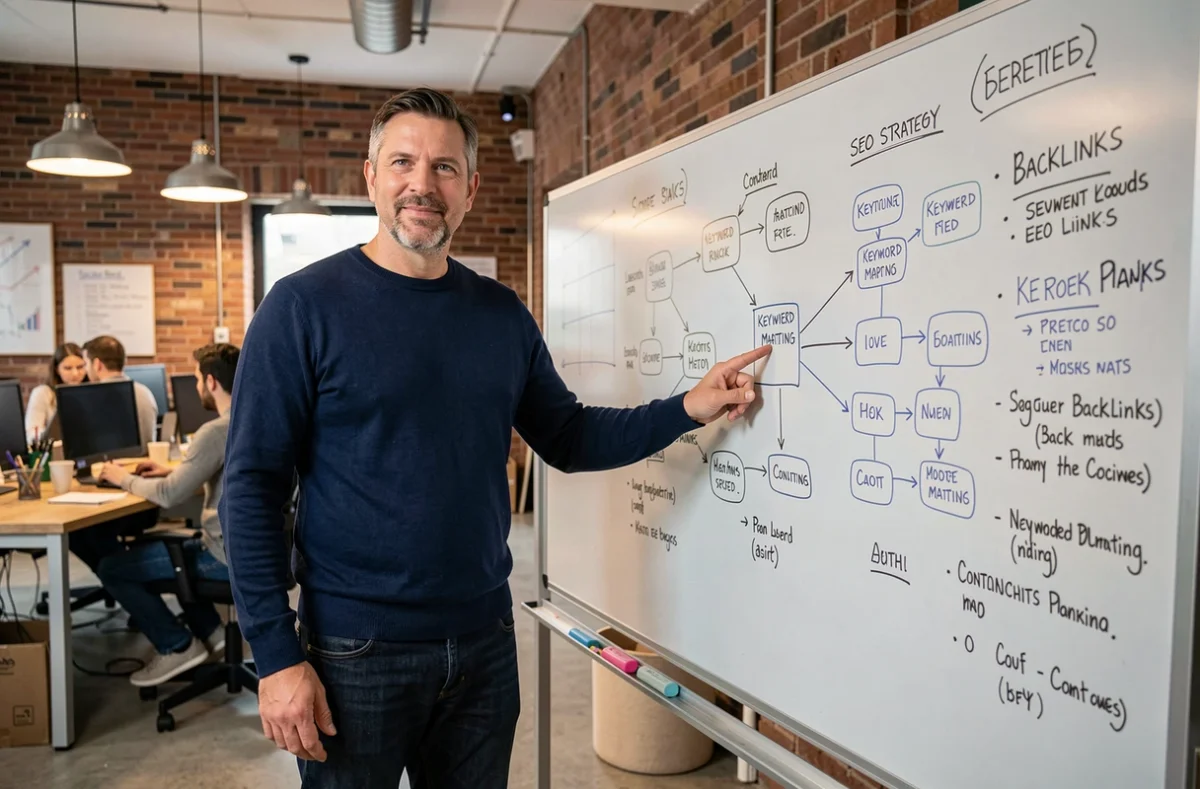
Expert content and quality signals: what Google values in 2024
Google has strengthened its quality criteria around experience, expertise, authority, and reliability. Useful, original, sourced pages with identifiable field experience withstand quality updates and generative responses that tend to overshadow generic content.
Writing content that AI cannot summarize in one sentence
Content that merely reformulates a definition or lists generic advice will easily be replaced by an AI summary in search results. To retain traffic, each page must provide an element that the generated response does not: a specific use case, a technical comparison, a field data point.
Content that still generates clicks is content that the user needs to read in full. Tutorial-style articles with detailed steps, quantitative comparative analyses, or guides accompanied by visuals perform better than lists of already-known best practices.
Internal linking and site structure
Internal linking remains an underutilized technical lever. Linking your pages together according to a thematic logic helps Google understand your site’s hierarchy and distribute authority to strategic pages.
- Group content by semantic cocoon: each group of pages addresses a topic from multiple angles, with cross-links between them
- Use descriptive link anchors instead of “click here”: the link text should indicate the subject of the target page
- Regularly check for broken links and orphan pages (not linked from any other page on the site)
A site whose internal linking reflects a logical structure facilitates crawling by search engines and improves the navigation experience for users.
Clickless searches and measuring SEO visibility
According to SparkToro/Datos data, nearly 60% of Google searches in the European Union ended without a click in 2024. In the United States, SparkToro/Similarweb reports an even higher proportion in the early months of 2026. This trend changes the way to manage an SEO strategy.
Measuring only incoming organic traffic no longer reflects a site’s actual visibility. Tracking impressions, average position, and click-through rate in Google Search Console provides a more accurate picture of your pages’ performance in search results.
Adapting tracking indicators
If your page appears in a high position but generates few clicks, the problem may lie in the title or meta description, which do not stand out in the SERPs. A title that is too generic or a description that repeats the snippet generated by Google does not encourage clicks.
- Write title tags that include a concrete benefit or a distinctive angle, not just the main keyword
- Test different meta descriptions on pages with high impression volume but low click-through rate
- Monitor the appearance of your pages in AI Overviews via Search Console reports when this data is available
Google confirmed in its documentation published in 2026 that a page must be indexed and eligible for a classic snippet to appear in AI Overviews. There is no specific markup or dedicated file to add: classic SEO best practices remain the prerequisite for visibility in these new formats.
Impact of the DMA on search results in Europe
The Digital Markets Act (DMA) is changing the search environment in the European Union. Google has begun to adapt the display of its results to comply with this regulation, which may redistribute visibility among different types of sites.
For a European site, this evolution means that acquired positions may fluctuate independently of any technical or editorial changes. Tracking positions by geographic area, and not just at a global level, becomes relevant for understanding these variations.
The most resilient SEO strategy in 2024 combines structured content by sub-intentions, tracking that goes beyond simple click counting, and monitoring regulatory developments that directly affect the display of results. Producing fewer pages but with real depth on each topic remains the best editorial investment in the face of increasingly saturated SERPs with automated responses.