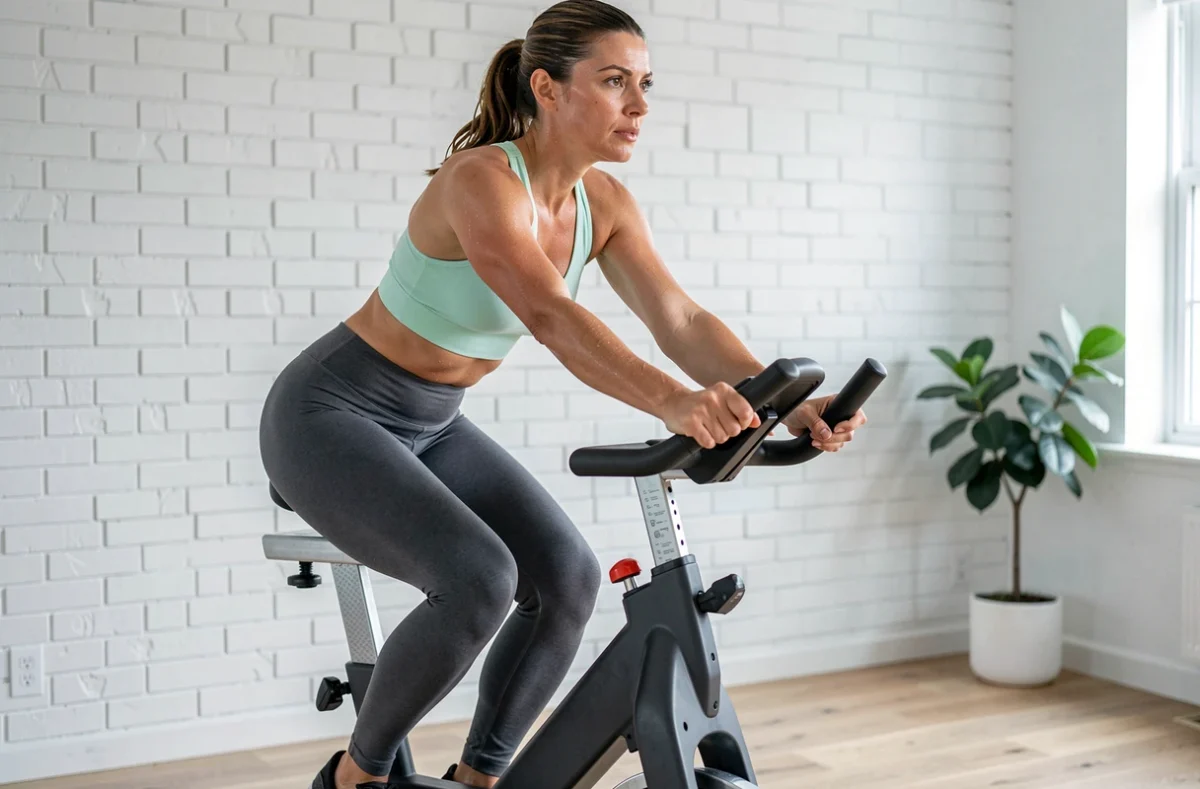
Exercise bikes burn calories, protect your joints and can be used at home in any weather. But lasting weight loss on an exercise bike depends less on how many sessions you do than on how you structure them—and, above all, what you track to assess your progress.
WHO guidelines also remind us that any physical activity is better than none, and that you can gradually increase your activity level: consistency matters more than starting intensity.
Calories shown on the console: why this number can be misleading
Most people rely on the calorie counter built into their exercise bike. The problem is that these figures are generic estimates, not reliable personal measurements.
The 2024 Compendium of Physical Activities confirms that actual energy expenditure varies according to body weight, body composition and effort. Two people cycling at the same pace for the same amount of time will not burn the same amount of energy. The console does not measure your actual calorie deficit.
In practice, using the displayed figure to justify eating more (“I burned 400 kcal, so I can have dessert”) often undermines your energy deficit. To lose weight with an exercise bike, it’s better to treat the console as a way to track trends, not as a bank balance.
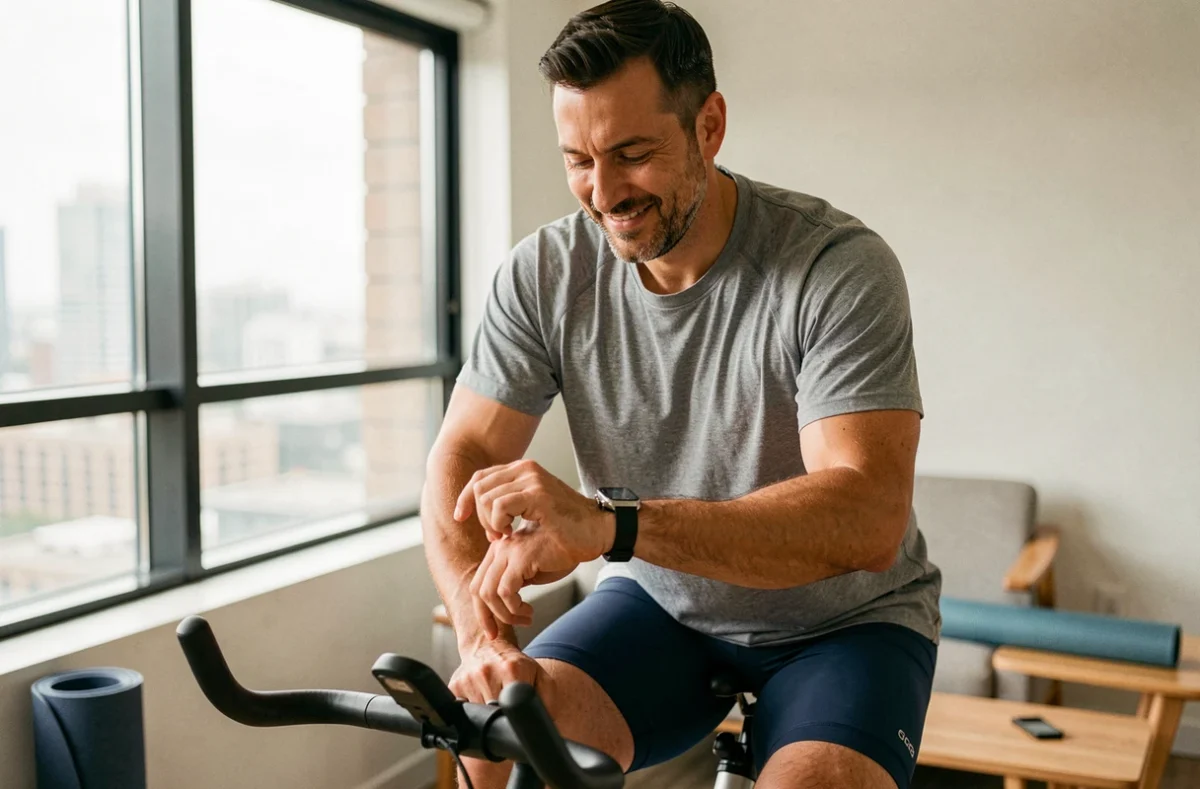
Weight loss with an exercise bike: structure your workouts to create a real deficit
A calorie deficit remains the key mechanism behind weight loss. An exercise bike can help you achieve one, but research shows that weight loss from exercise alone is often modest and varies from person to person. Diet does most of the heavy lifting; cycling speeds up the process and helps preserve active muscle mass.
Moderate intensity as your foundation, with intervals as a supplement
A workout that leaves you breathing harder but not gasping for air is considered moderate intensity. Regular sessions at this level form the foundation of a weight-loss training plan.
Interval training—alternating intense periods with recovery periods—increases energy expenditure in less time. It doesn’t replace moderate-intensity sessions, but complements them by placing greater demands on your metabolism after exercise.
Frequency and duration: progress matters more than your starting volume
Starting with three weekly sessions of a comfortable duration, then extending them or adding a session every two weeks, follows WHO recommendations for gradually increasing your activity level. An overly ambitious plan from the first week can lead to giving up or accumulating fatigue.
- First phase: three moderate-intensity sessions per week, each lasting long enough for you to finish without feeling exhausted. The goal is to build a habit.
- Second phase: gradually increase your cycling time or add a fourth session, depending on how well you recover.
- Third phase: add one interval session per week while keeping moderate-intensity sessions as your foundation.
Strength training and cycling: why cardio alone isn’t enough
The WHO recommends including exercises that strengthen the major muscle groups at least two days a week. An exercise bike mainly works the quadriceps, hamstrings and calves. Your upper body and core get relatively little work.
Adding strength training—such as push-ups, squats, planks and dumbbell exercises—offers two benefits for weight loss. First, muscle uses energy at rest, helping support your basal metabolic rate. Second, building more muscle can change your body shape even when the number on the scale stays the same.
Two short strength-training sessions a week, scheduled on days when you don’t cycle or after a short ride, are enough to complement your cardiovascular training without overloading your schedule.

When your weight plateaus despite cycling: progress indicators to track
It’s common for your weight to plateau after several weeks of regular exercise, and it doesn’t mean your efforts are pointless. The WHO links regular physical activity to health benefits in adults, regardless of changes in body weight. Your health can improve before you see a noticeable drop on the scale.
Practical indicators to monitor beyond your weight
Replacing the daily weigh-in ritual with a broader range of measures can help you stay motivated and see your progress more clearly.
- Exercise tolerance: does the same workout leave you less out of breath than it did three weeks ago? If so, your cardiorespiratory fitness is improving.
- Measurements (waist and hip circumference): body composition often changes before total weight, especially when you combine cycling with strength training.
- Consistency: completing three sessions a week for two months is an achievement in itself, because consistency is essential for long-term results.
- Sleep quality and energy levels: both often improve with regular activity and can indirectly support weight management.
Setting a specific weight goal for a particular date can lead to drastic changes when your progress doesn’t match expectations. Tracking several indicators at once gives you a more complete picture and helps you avoid mistaking a weight plateau for a lack of progress.
What to adjust when a plateau persists
If your weight hasn’t changed after four to six weeks of regular exercise and controlled eating, it’s worth looking at two factors. The first is workout variety: your body adapts to repetitive stimuli, so changing the duration, intensity or type of session can challenge your metabolism in new ways.
The second is your diet, which remains the main factor in creating a calorie deficit. A consultation with a healthcare professional or dietitian can help identify an imbalance that cycling alone won’t correct.
Sustainable weight loss with an exercise bike comes down to three simple elements: regular, progressive workouts; complementary strength training; and progress measures that go beyond the number on the scale. One final point to remember: regular cycling benefits your cardiovascular health and joints even when the number on the scale doesn’t change.