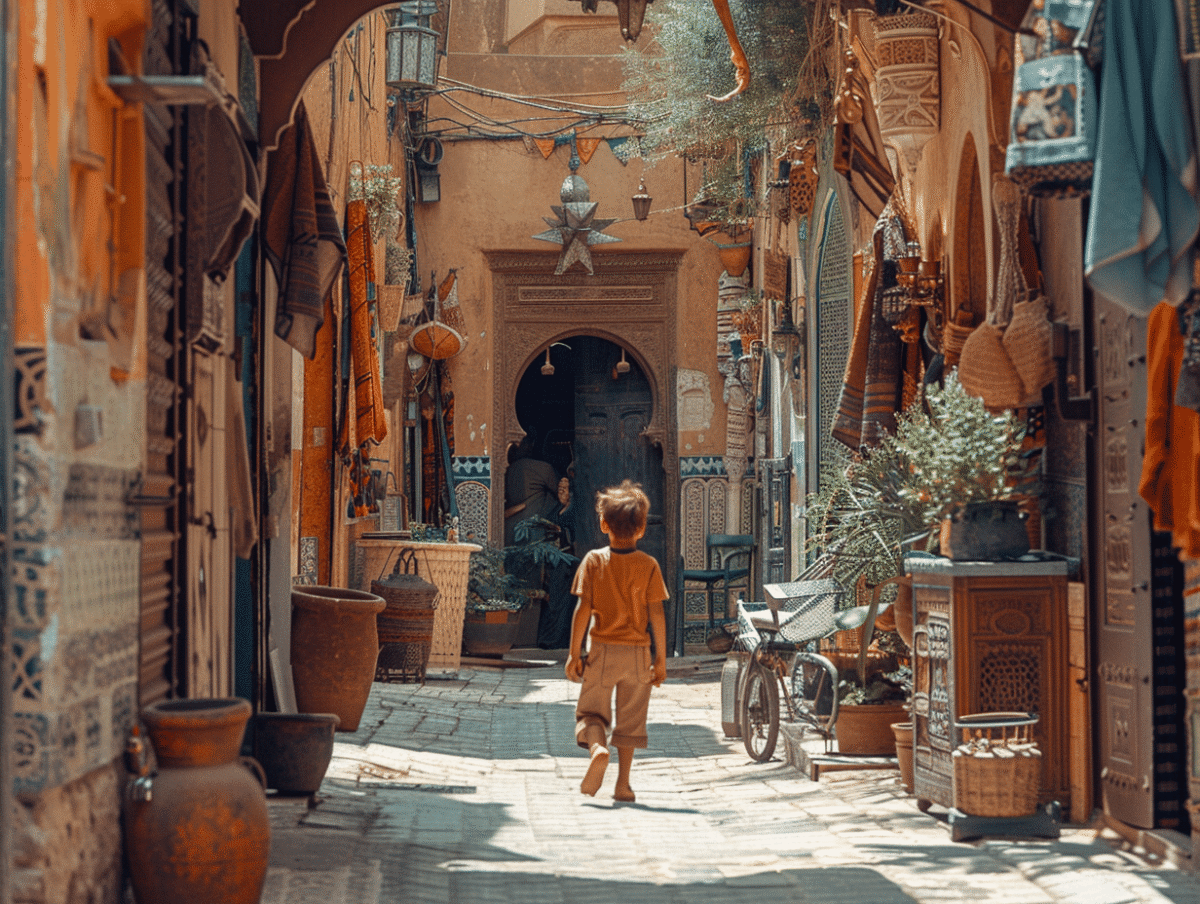
In the Moroccan literary landscape, ‘La Boîte à Merveilles’ by Ahmed Sefrioui holds a prominent place, tinged with a gentle nostalgia and an introspective look at childhood. This narrative, often described as the first Moroccan novel written in French, oscillates between lived reality and fictional romance, offering readers an immersion into 1930s Fès through the eyes of a child. The very nature of this work sparks a debate: should it be considered a strict autobiography or rather an autobiographical novel where the boundary between personal memory and imagination is blurred? This questioning fits into a broader reflection on the mechanisms of memory and the narrative construction of self.
The Generic Duality of La Boîte à Merveilles: Between Life Narrative and Fiction
La Boîte à Merveilles, this flagship work of Ahmed Sefrioui, is part of the literary movement of Maghrebi literature in French. Its generic classification is the subject of an ongoing debate. The analysis of La Boîte à Merveilles by A. Sefrioui as autobiography or autobiographical novel reveals a complex tapestry, where the threads of personal memory and literary creation intertwine with remarkable finesse. The work, rooted in the setting of Fès, an emblematic Moroccan city, blurs the lines between the real and the imaginary, between the faithful restitution of a past and the artistic reconstruction of a life.
The autobiographical dimension seems evident, with the narrator, Sidi Mohammed, sharing several traits with the author, Ahmed Sefrioui. Born in 1915, Sefrioui, like his character, grew up in Fès. Is the Sidi Mohammed of the novel an exact alter ego of the author, or a fictional figure with its own life, shaped by the writer’s imagination? The genre here is elusive, and it is in this in-between space that La Boîte à Merveilles unfolds its richness.
At the heart of the narrative, the identity quest of the narrator merges with that of the author, raising the question of the overlap of identity between author and character. The city of Fès, with its alleys and customs, is not just a backdrop but a character in its own right, influencing and shaping the protagonists. The meticulous descriptions and numerous anecdotes lend undeniable authenticity to the work, reinforcing the autobiographical hypothesis.
One must not forget the novelistic dimension that permeates the work. The narrative, with its universal character, transcends mere testimony to touch on the universal. The secondary characters, such as Lalla Aicha, acquire a depth that goes beyond a simple transcription of memories. The dialogues, narrative structure, and attention to detail of Sefrioui elevate La Boîte à Merveilles to the status of a novel, where personal experience becomes the soil for an artistic creation that transcends the individual.

The Mechanisms of Autobiography in La Boîte à Merveilles: Analysis and Interpretations
In La Boîte à Merveilles, the autobiographical mechanism manifests through the prism of a child-narrator, Sidi Mohammed, who could be seen as the shadow of Ahmed Sefrioui in his early youth. The overlap of identities between author and character raises the question of the fidelity of the restitution of memories. The adult Sefrioui, founder of the Musée Al Batha and former curator of the Musée Addoha in Fès, may have drawn from his rich cultural and professional past to weave the fabric of a story that is both personal and universal. The authenticity of childhood memories, confronted with the reality of an adult involved in institutions such as the Ministry of Culture and the Ministry of National Education, enriches the narrative with a complex and nuanced texture.
The character of Lalla Aicha, a friend of the narrator’s mother, perfectly illustrates this intersection between lived experience and fiction. The existence of such a figure in the author’s life remains uncertain, but her presence in the work contributes to the psychological and emotional depth of the narrative. This character, among others, allows for the exploration of themes of friendship, female solidarity, and social dynamics within the medina of Fès. These elements, while potentially rooted in reality, are transfigured by the gaze of the author-narrator, thus offering a multi-layered reading where autobiographical reality and novelistic creation intertwine.
Thus, Sefrioui’s work, and particularly La Boîte à Merveilles, is subject to a dual reading: autobiographical, on one hand, with real, tangible elements drawn from the writer’s memory; novelistic, on the other, where personal experience transforms into an artistically crafted narrative. The choice of first-person narration enhances the sense of intimacy with the reader while leaving room for doubt about the portion of reality and imagination. This ambivalence serves as a catalyst for interpretation, inviting the reader to dive deep into the author’s universe while allowing them the freedom to distinguish the character from the individual who actually lived.