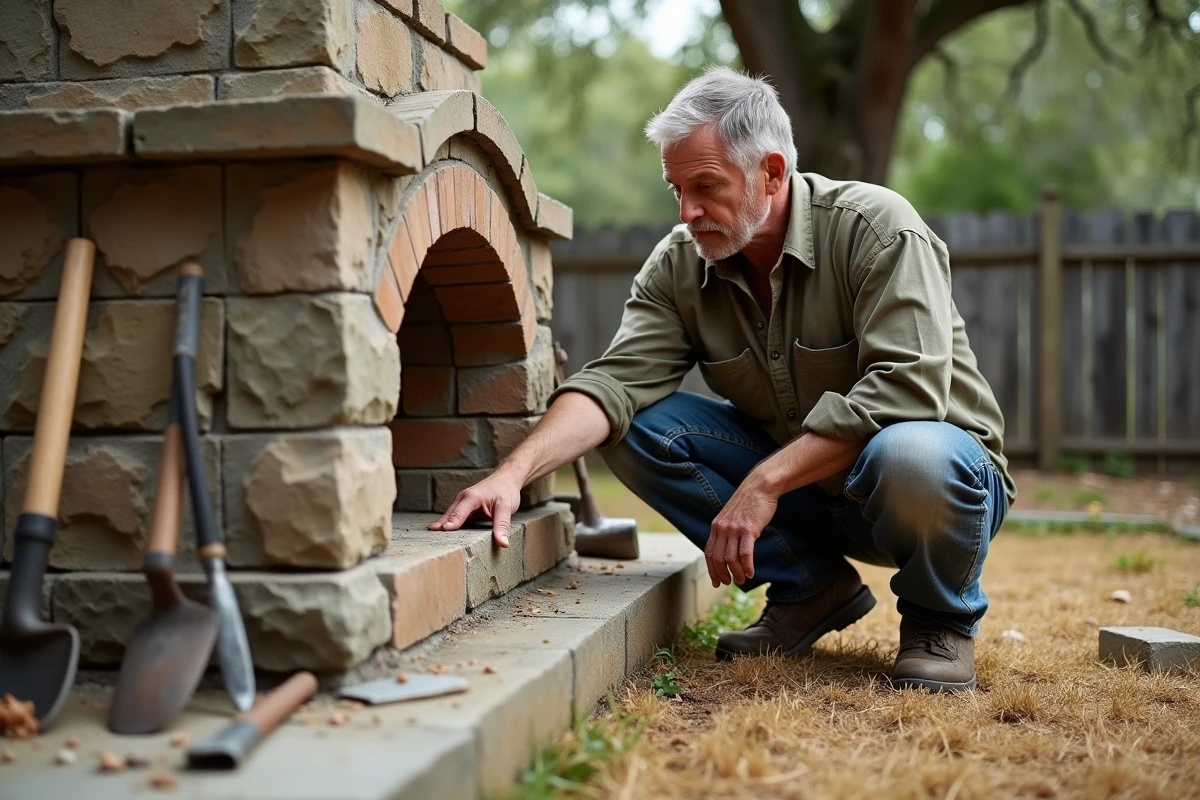
A stone barbecue that shows cracks after a few winters is not considered a manufacturing defect. The cycles of freezing and thawing weaken the joints and masonry, a phenomenon that the Météo-France report of March 2026 on the climatic impacts of outdoor construction materials directly associates with the amplification of extreme thermal variations.
The question then is less about the diagnosis than about the choice of repair binder, a choice that commits the durability of the structure for several years.
Reconstituted stone or natural stone: cracking follows different logics
Before taking out the trowel, it is essential to identify the material of the barbecue. The CSTB technical bulletin No. LT-2025-47 on the durability of exterior coatings indicates that barbecues made of reconstituted stone crack half as much as natural stone under prolonged UV exposure, thanks to the polymer additives incorporated during manufacturing.
This difference changes the repair strategy. On reconstituted stone, cracks often appear at the assembly joints. On natural stone, they sometimes run through the block itself, complicating surface sealing. A mortar applied over a through crack without proper preparation will not last more than one season.
The other determining factor remains porosity. According to the AFNOR study of February 2026 on repair materials for exterior masonry, flexible epoxy mortars show 30% higher adhesion on porous stone compared to conventional resins. If your barbecue is made of limestone or sandstone, this information directly influences the choice of product.
To go further into complete restoration, particularly the replacement of the firebox, you can repair a cracked stone barbecue by following a protocol suited to each type of material.
Aerial lime and geopolymer: ecological binders for stone barbecues
Most repair guides recommend industrial refractory mortar or epoxy resin. These products work, but their environmental impact raises questions, and their rigidity can become a disadvantage on structures subjected to significant thermal fluctuations.
Aerial lime, an ancient binder that breathes
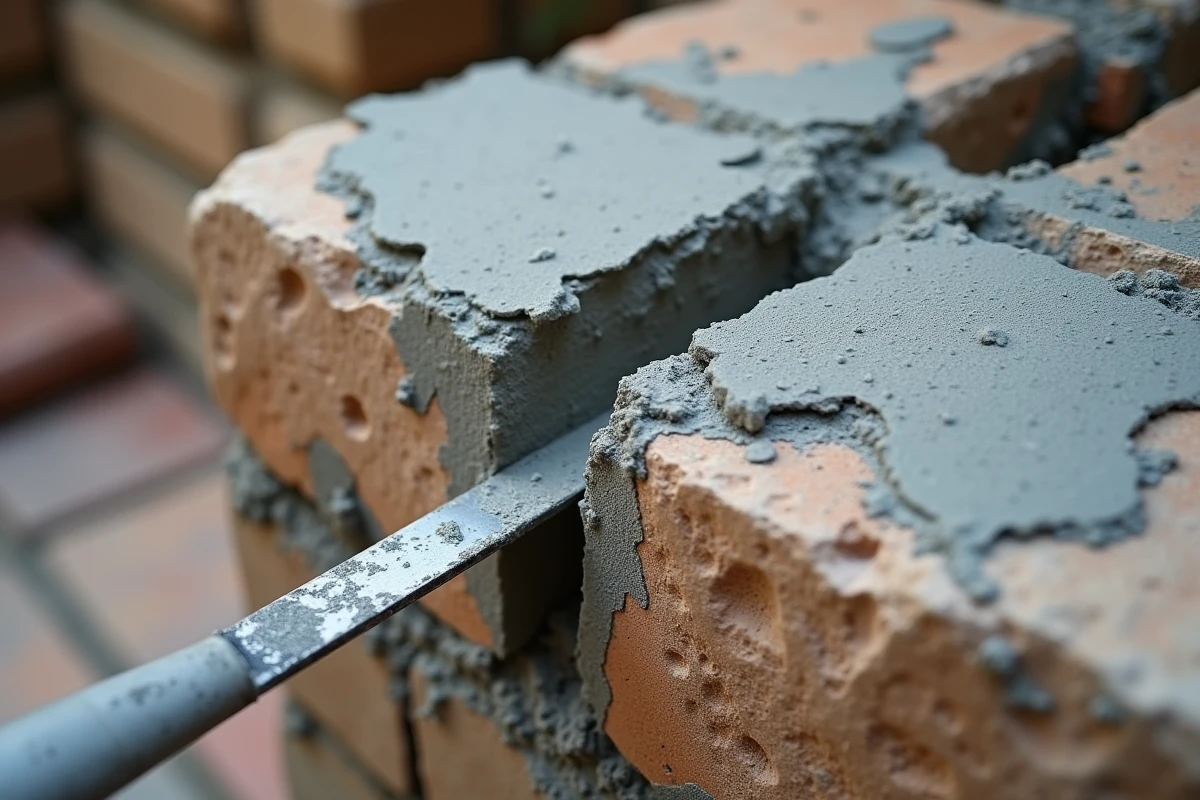
Aerial lime (CL 90) hardens through carbonation when in contact with atmospheric CO₂. When applied as a repair mortar on a stone barbecue, it offers a major advantage: lime remains flexible and absorbs micro-movements without cracking. It is the historical binder of traditional masonry, perfectly compatible with limestone and refractory bricks.
The setting time is longer than that of cement mortar (several days compared to a few hours). This delay requires protecting the repair from rain and not using the barbecue for at least a week. Field reports vary on this point: some masons report satisfactory performance after five days in dry climates, while others recommend waiting two weeks in humid areas.
Geopolymers, a more recent option
Geopolymer binders are made from fly ash or metakaolin activated by an alkaline solution. Their resistance to high temperatures makes them logical candidates for a barbecue firebox. They do not require firing in a kiln, unlike Portland cement, which reduces their carbon footprint during manufacturing.
The available data does not allow for conclusions about their long-term durability in outdoor domestic use. Documented applications mainly concern civil engineering and industry. For a garden barbecue, aerial lime remains the most proven ecological choice at this stage.
Preparing the crack: the actions that determine the mortar’s performance
Regardless of the binder chosen, preparing the crack determines the success of the repair. A mortar applied to a dirty or crumbly surface will peel off within months.
- Open the crack with a chisel or grinder to a few millimeters wide to allow the mortar to penetrate deeply, not just on the surface.
- Brush the inside of the crack with a wire brush, then vacuum the debris and dust with a blower or workshop vacuum.
- Moisten the stone with a sprayer without saturating it with water: the surface should be damp to the touch, not dripping. The porous stone absorbs the binder too quickly if it is dry, leading to premature shrinkage.
For cracks wider than one centimeter, filling the bottom with coarse sand or pieces of refractory stone reduces the amount of mortar needed and limits shrinkage during drying.
Applying the mortar and protecting the stone barbecue after repair
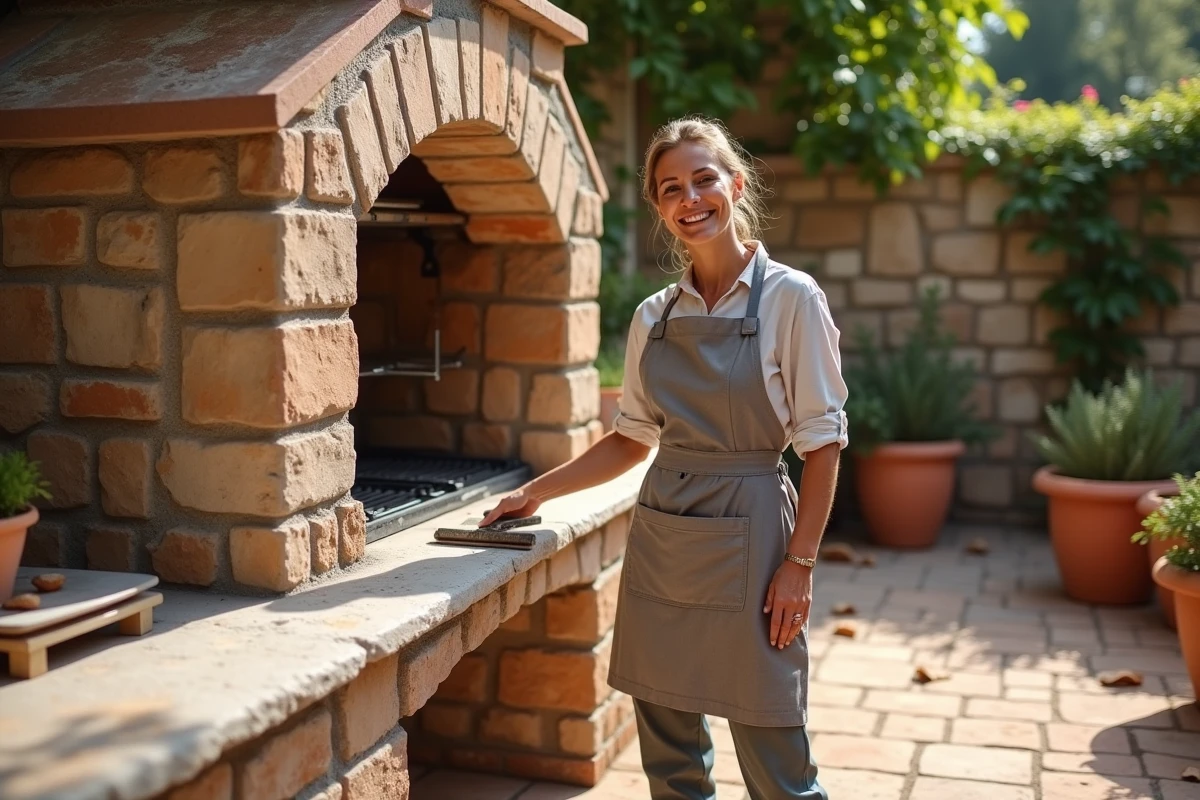
The filling is done in two passes. The first layer, called the bonding layer, is pressed into the bottom of the crack with a fine spatula. Allow this first layer to set before applying the second to prevent sagging and improve cohesion.
The second layer is smoothed to the level of the stone surface. A slight excess will be easier to sand down once dry than having to redo a fill on a hollow.
Drying and first heating
The complete drying time depends on the binder used:
- Classic refractory mortar: wait at least 48 hours before a first moderate heating, then gradually increase the temperature over two or three uses.
- Aerial lime mortar: plan for a minimum of one week without use, longer in humid climates. The first heating should remain gentle to avoid thermal shock on the binder still undergoing carbonation.
- Flexible epoxy mortar: respect the curing time indicated by the manufacturer, usually 24 to 72 hours depending on the ambient temperature.
After repair, a winter protective cover reduces exposure to freeze-thaw cycles, which are the primary cause of recurring cracks. On an untreated natural stone barbecue, a surface water repellent applied once a year limits water infiltration into the micro-pores.
Repairing a cracked stone barbecue does not require professional masonry skills, but it does require patience during drying and an honest diagnosis of the structure’s condition. A crack that reappears in the same place after two repairs indicates a foundation or design problem, not a defect in the mortar.